Fix your dialogue: a hands-on guide
Create distinctive voices for each character
Turn dialogue into character expression
Use dialogue as action
Create tension with silence
Avoid exposition dumps
Write with more subtext
Craft snappy, punchy dialogue
Revising dialogue for your next draft

A fresh take on “Show, don’t tell”: information density
“Show, don’t tell” is best understood as an information density problem. This may occur when a character’s words and actions overlap too much. By reducing how much information stays verbal, and partially offloading it to behavior, props, or reactions, you create more natural scenes, add suspense, and open space for character expression. The goal isn’t less dialogue, but lower information density per line.
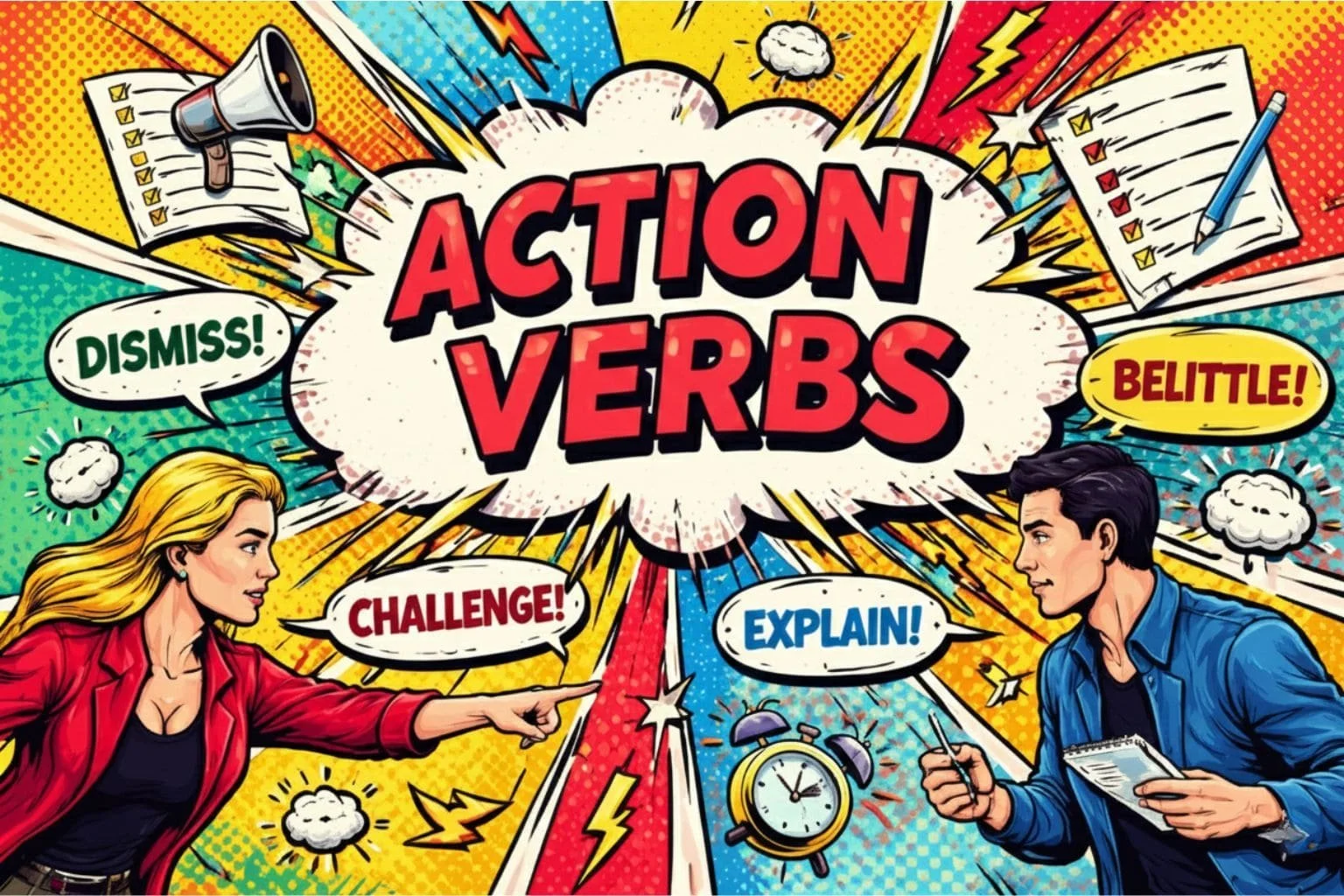
Fix fluffy dialogue with action verbs
Fluffy dialogue is when spoken lines stop carrying intent. Action-driven dialogue fixes this by starting with the character’s scene objective, choosing an action verb that serves that goal, and then writing a line (or replacing it with physical action) that performs the action. By thinking in action verbs (such as 'to dismiss', 'to challenge', 'to belittle' etc.) you create clear cause-and-effect between lines, trim filler words, and make dialogue actively move the scene forward rather than stalling it.
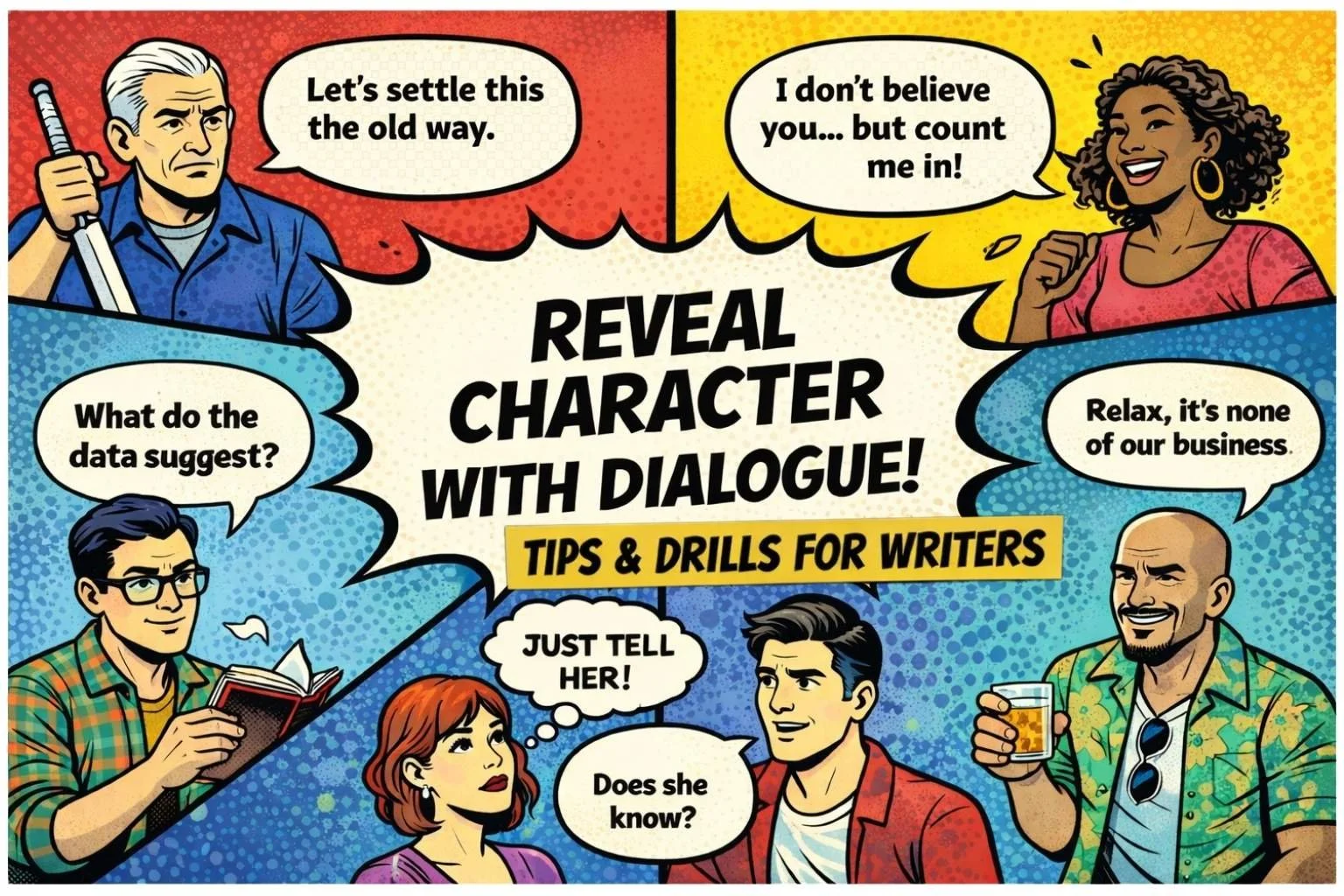
Reveal character with dialogue: tips & drills
Use dialogue to perform the character’s narrative role
Use archetype as a baseline for your dialogue
Let justifications for their decisions establish how the character perceives the world
Use reactions in dialogue to reveal what the character values
Force their beliefs into spoken action during a dilemma
Embed character traits and quirks into the spoken line’s underlying action
Use vocabulary, not facts, to reveal character background
Make the spoken line behave like that mind would behave
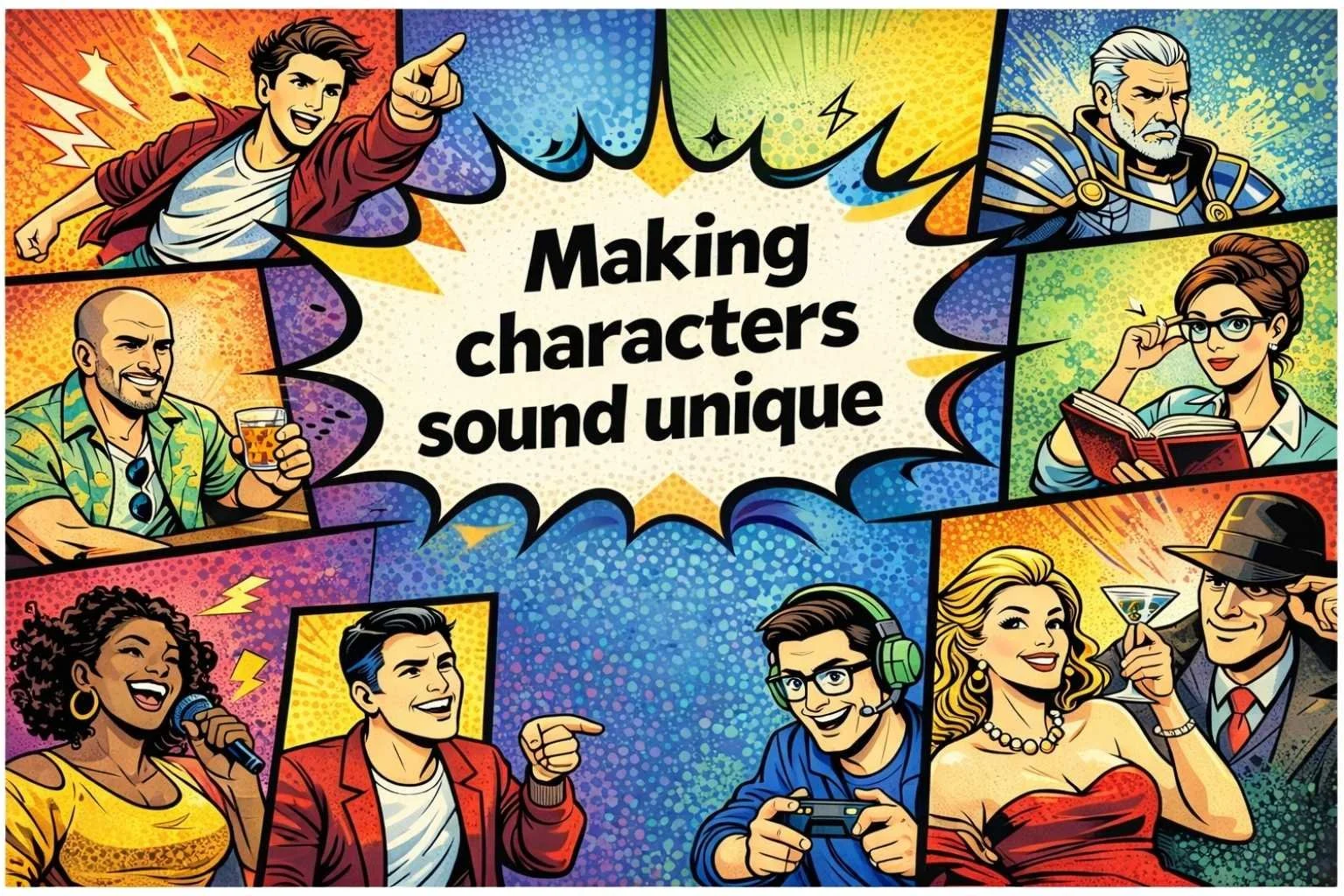
Making characters sound unique: 6 practical tips
Anchor dialogue to each character’s thematic contrast to the protagonist
Make the character’s unique voice behavioral, not stylistic
Use background and personality to shape vocabulary
Give each character their own phrasing and idiolect
Give your characters contradictory traits
Reveal contrast through scene pairings